
November 11th Whole Farm and Winter CSA
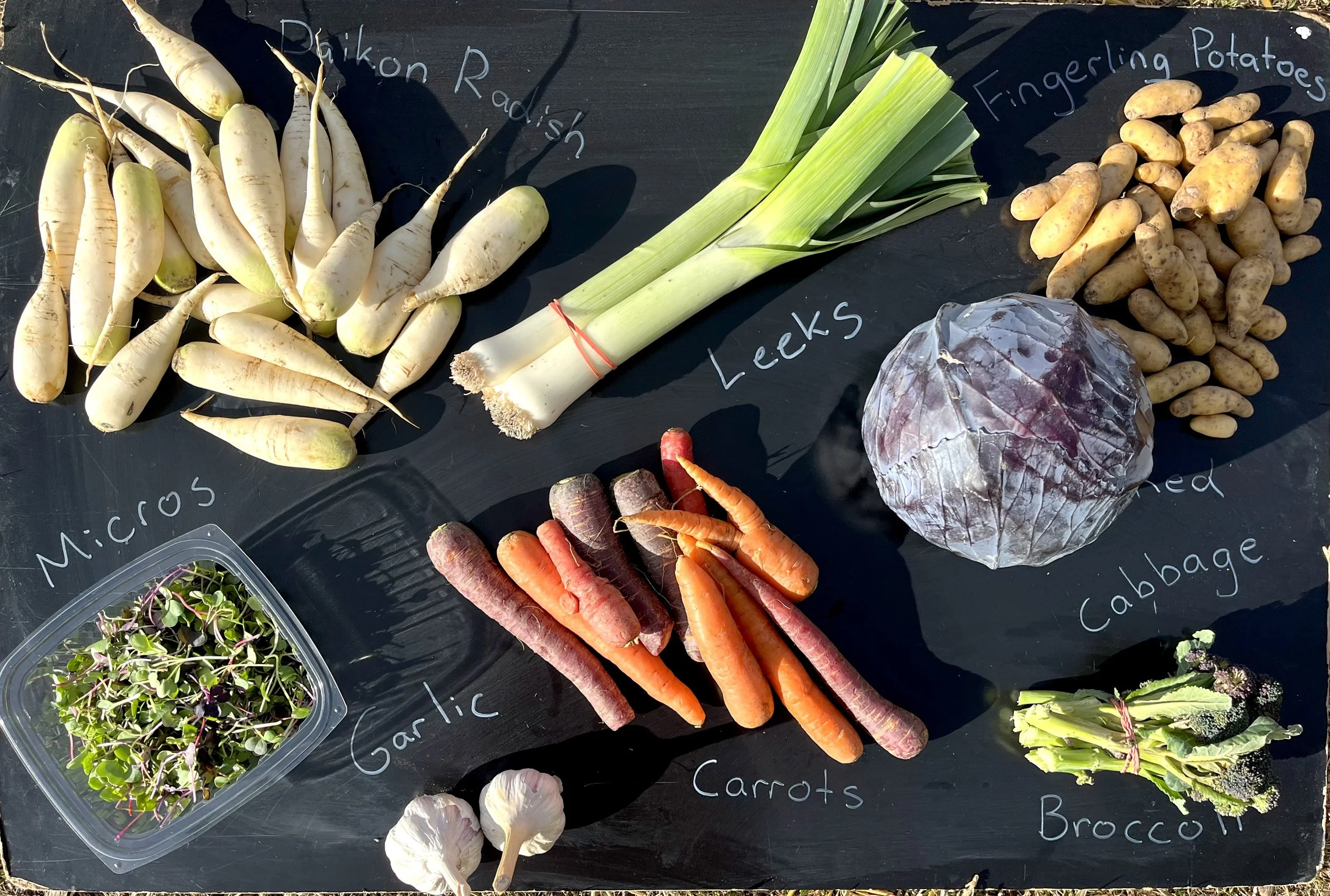
Full Share: White daikon, carrots, red cabbage, leek, broccoli, miso green choice, fingerling potatoes, garlic
Half Share: White daikon, carrots, red cabbage, leek, miso green choice, fingerling potatoes, garlic
These warm sunny days have given us the opportunity to work on our pre-winter outside tasks. We are harvesting radishes today which is our final root vegetable crop still in the ground.
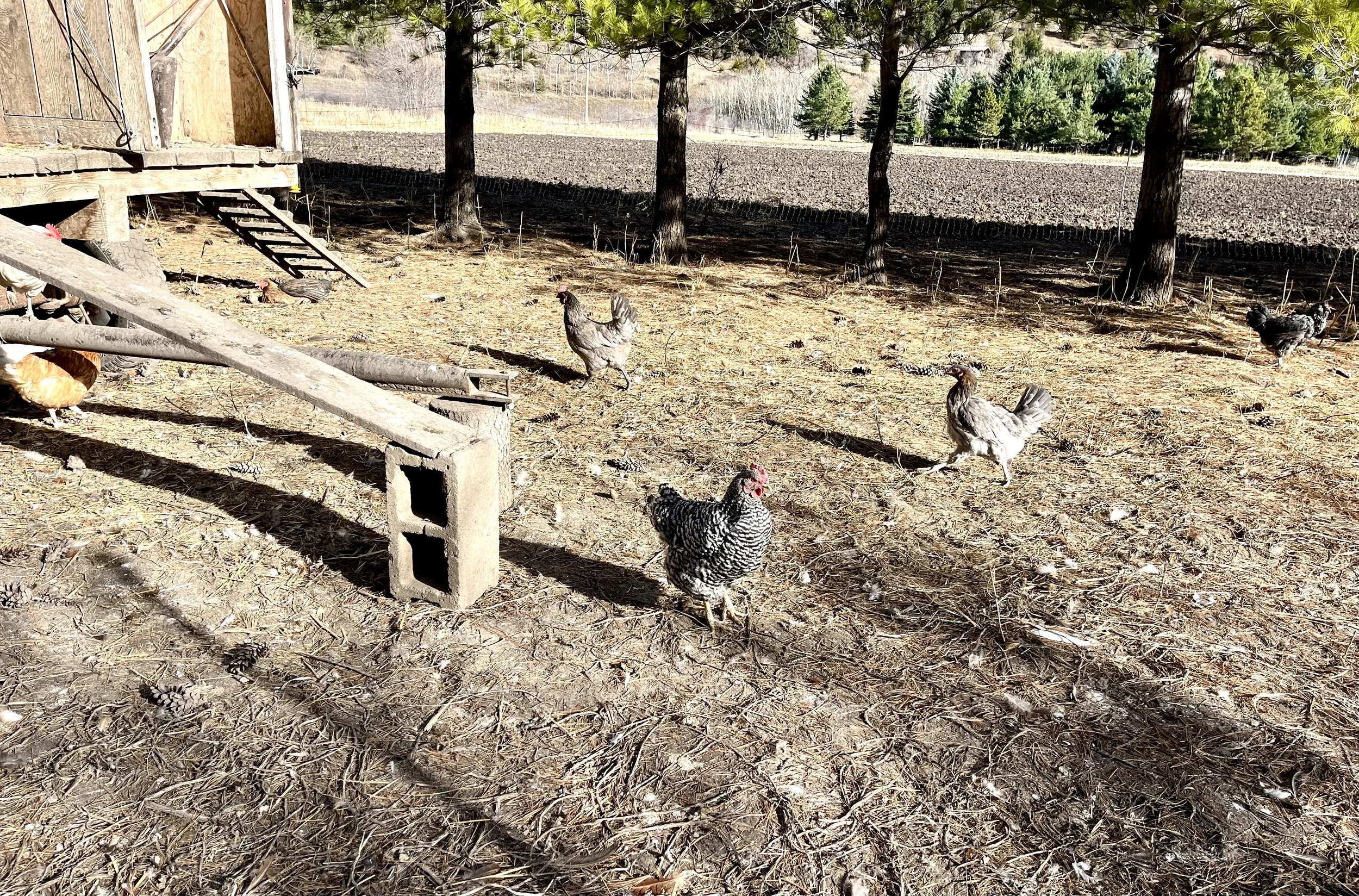
The chickens, are not as easily swayed by the warmth to carry on with egg laying. Chickens are adapted to respond to the length of the day rather than sunshine and temperature. Chickens require 14-16 hours of daylight for peak egg production. They have a special photo receptive cells in their brains which trigger hormones that control egg production (fertility). As the days get shorter chickens slow down egg laying in anticipation of colder times and less food availability. In the fall chickens also molt their old feathers and grow new feathers to keep them warm through the winter. Growing new feathers takes significant energy and protein so they have less to spare for laying eggs. This means it won’t be the chickens who are surprised when the weather inevitably takes a sudden turn towards winter.
Science aside, there is another big contributor to low eggs on the farm right now. A fox killed 75 of our young birds in the spring who would have just started laying this fall. The science of hungry foxes is not quite as physiologically complex, but equally agriculturally impactful.
All this is to say that there will again be no eggs this week. But we are saving every egg laid with our sets sight on next week.
This week your boxes are made up of a “wet bag” with carrots and daikon radishes, fresh produce like micros and cabbage, and a “dry bag” of potatoes and garlic. When you come in, grab your wet back and fill it up with all of the other loose CSA produce. This whole bag can go in the fridge. The dry bag does not need to be refrigerated – store it in a dark, cool place.
All of the produce in your box this great week is yummy in a stir fry, fried rice, or noodle dish. Try this veggie fried rice recipe.
Fried Rice Recipe
2 cups white rice (leftover is best)
2 T olive oil
2 leeks (or onion) chopped
3 daikon radish diced
2 carrots cut into dimes
1 head broccoli chopped
1/2 cabbage chopped
3 cloves of garlic finely chopped
1 T grated ginger
4 T oyster sauce
2 T fish sauce
2 T rice wine vinegar
1 T Sesame oil
2 T Soy sauce
3 eggs
1 cube Tofu (or substitute with chicken)
Micro Greens
Green onions
Peanuts
Cook 2 cups of white rice in a pot or rice-cooker. Leave to cool (or refrigerate over night). Heat up a large pan or wok with olive oil. Add leeks to the hot pan and cook while stirring until translucent. Add in radish, carrots, broccoli and cabbage. Stir and put a put on a lid, steaming everything for 5 minutes. Add in garlic, ginger, oyster sauce, fish sauce, rice wine vinegar, and sesame sauce. Stir well and cook for another 3 minutes. Mix in rice. Make sure that there is enough oil that your rice doesn’t stick to the pan. Add soy sauce. Push rice to one side and crack 3 eggs into the empty pocket of pan space. Scrample the eggs until mostly cooked. Then add in tofu and gently mix everything together. Cook for another 5 minutes and remove from heat. Serve with a garnish of micro greens, green onions, and peanuts. Add soy sauce and hot sauce to taste.
Another easy option is to make a rice bowl. Cook up all the same vegetables with the same sauces and tofu then serve on top of rice.
Leeks are an incredibly versatile vegetable. Substitute in to any recipe where onions are called for and enjoy a slightly sweeter, butterier richness.
Happy Cooking!
Lily